Cleaning Plant Leaves: Why, When, and How
Run a finger down a rubber plant leaf that has not been touched in three months and you will pick up a grey film. That film is not just untidy. It sits between your plant and the light it needs, and cleaning it off is one of the highest value, lowest effort things you can do for an indoor plant.
What dust actually does to a leaf
A leaf is a solar panel. Anything on the surface reduces the light reaching the chlorophyll underneath, and researchers have measured how much that costs.
In a study of dusted cotton plants published in BMC Plant Biology, heavy dust accumulation dropped net photosynthetic rates to roughly 75 percent of clean control leaves, and the researchers described the effect as functionally similar to putting the plant in shade. The plants even responded with shade-type adaptations, growing thinner leaves with more surface area, and still did not fully compensate.
There is a second mechanism too. Leaves breathe through microscopic pores called stomata, taking in carbon dioxide and releasing water vapor. Research on cucumber and kidney bean plants found that dust physically blocked those pores and reduced stomatal conductance, and that dust also absorbed radiation and raised leaf temperature. Fine particles, exactly the kind of household dust that settles indoors, caused the strongest effects.
Add it up and a dusty plant is getting less light, exchanging gas less efficiently, and running warmer than it should. Cleaning fixes all three in about a minute per plant.
Safe methods by leaf type
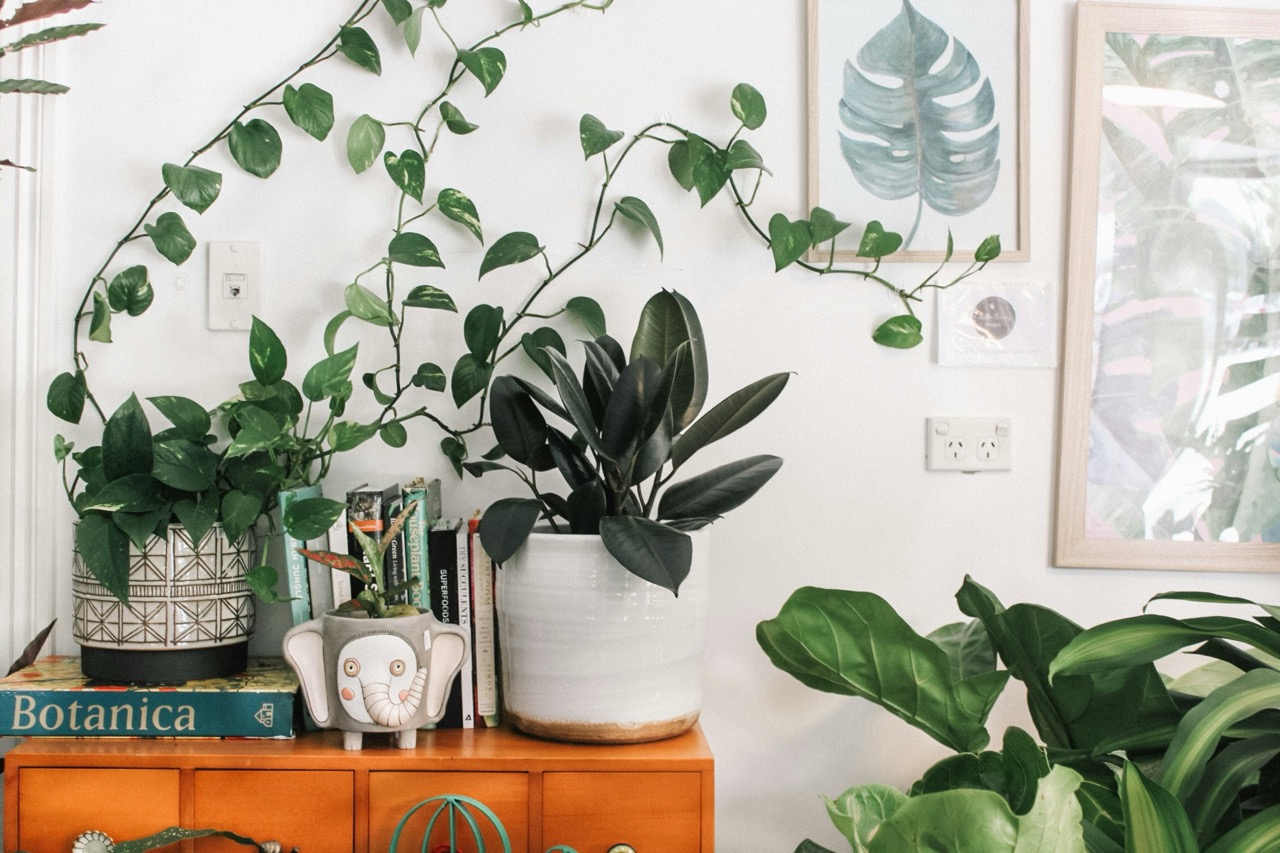
Large, smooth, sturdy leaves such as monstera, rubber plant, philodendron, bird of paradise, and fiddle leaf fig. Support the leaf from underneath with one hand and wipe the top with a soft damp cloth in the other. Use plain room temperature water. Support matters, because unsupported leaves tear at the petiole.
Many small leaves such as pothos, ferns, hoyas, and trailing plants. Wiping each leaf is tedious, so rinse instead. University of Wisconsin horticulturists recommend periodically running lukewarm water over houseplants in the sink or shower, which removes dust and insects while also leaching excess salts out of the potting mix. Use gentle pressure, cover the soil with your hand or a plastic bag if the pot is prone to washing out, and let the plant drain fully before it goes back on a shelf.
Succulents and cacti. Use a soft dry brush, a makeup brush or paintbrush works well. Avoid soaking, especially in rosettes where water sits in the crown and rots it. Never scrub the powdery bloom off echeverias, since that coating is the plant's own sun protection.
Fuzzy leaves such as African violets, gloxinias, and panda plants. The hairs on these leaves trap water, and water sitting on them causes spotting and rot. Use a soft dry brush only, and never wet the foliage.
What to skip
Leaf shine sprays are worth avoiding. They coat the surface with a residue that adds one more barrier over the leaf and can clog stomata, which is precisely the problem you started out trying to solve. The same goes for the folk remedies you will see online: mayonnaise, olive oil, milk, and coconut oil all leave an oily film that traps more dust than it removes.
Skip household cleaners, dish soap, and anything with alcohol or detergent unless you are deliberately treating pests with a properly diluted insecticidal soap. Plain water handles routine dust. Do not clean leaves in strong direct sun either, because droplets plus intense light can leave marks, and always let plants dry in a spot with decent airflow.
How often, and what to look for
Once a month is plenty for most homes. Every two months is fine if you live somewhere dusty enough to notice. Plants near a kitchen, a fireplace, or a busy street collect grime faster and deserve more frequent attention.
The real bonus is that cleaning forces you to handle every leaf, including the undersides where spider mites, scale, and mealybugs hide. Most people who catch an infestation early catch it with a cloth in their hand. Combine cleaning with your monthly rotation and you have a single ten minute routine that keeps the whole collection healthier.
Shopping for plants this weekend?
Our directory lists plant nurseries and garden centers across the US with each one's address, phone, and website, so you can buy from real local growers.
Find a nursery near you